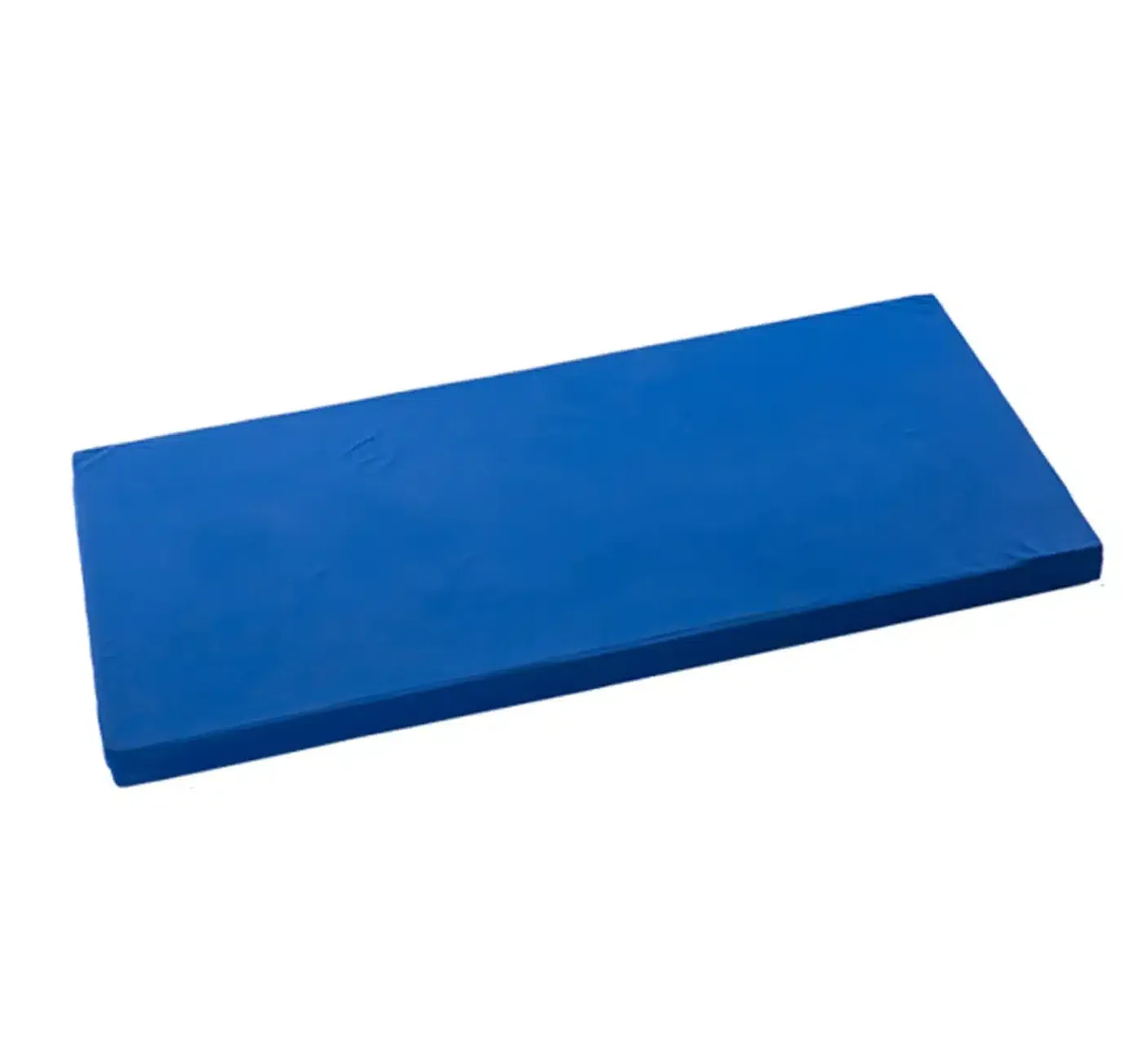
Most waterproof mattress covers fail for the same three reasons: they trap heat, the zip gives out, or the laundry destroys the membrane. Any cover can keep liquid out on day one. The question is what it is like after two hundred washes.
Waterproof and breathable are not opposites
A cover made waterproof with a solid plastic film keeps fluid out and keeps vapour in. The patient sweats, the sheet gets damp, and skin sits against moisture — which is exactly the problem a pressure-care programme is trying to avoid.
A polyurethane membrane behaves differently. It blocks liquid water but allows water vapour to pass, so body moisture escapes rather than condensing on the surface. For anyone lying on the mattress for long periods, this is the single most important property after the barrier itself.
What to ask a supplier: is the fabric vapour-permeable, and how does it behave in use — not just what the film blocks.
Stretch matters more than people expect
A cover that does not move with the mattress creates ridges, and ridges create pressure points. A two-way stretch knit conforms to the mattress and to the patient, keeping the surface flat.
It also affects fitting. A stiff cover is a two-person job on a ward; a stretch cover is not.
The closure is where covers die
The zip is the most mechanically stressed part of the whole product. It gets opened and closed by people in a hurry, it gets laundered, and on many covers it is the first thing to fail.
- A zip that runs along two sides makes fitting and removal much faster than one that runs along a single edge
- A flap over the zip keeps fluid out of the teeth
- Ask what the zip is rated for, not just that it has one
Match the cover to the wash you actually run
This is the decision that most often gets skipped. A domestic 60 °C cycle and a hospital 90 °C cycle with disinfectant are different environments, and a cover specified for one will not necessarily survive the other.
Before ordering, write down:
- The wash temperature
- The chemistry — disinfectant, bleach, or neither
- How often each cover goes through it
- Whether it is tumble dried, and at what heat
Give that list to your supplier. A manufacturer who cannot answer questions about laundering has not thought about the product's service life.
Sizing
Made-to-measure is cheaper than it sounds and much cheaper than a cover that does not fit. Measure the mattress depth as well as length and width — depth is what most standard covers get wrong, and a cover that is too shallow will pull off the corners every time the bed is moved.
Choosing a hospital bed mattress cover
On a hospital bed the cover stays on for months, is washed often and meets disinfectant. Look for a vapour-permeable, two-way stretch construction that survives hot washing. Our PU polyurethane mattress cover is made to that brief: a polyurethane-coated polyester knit, a zip on two sides and washing at up to 85 °C. See every model in the hospital mattress covers collection, and read PU or PVC? for the material choice.
A short checklist
- Vapour-permeable membrane, not a solid film
- Two-way stretch
- Closure suited to how often it will be opened
- Specified for your actual wash cycle
- Made to your mattress dimensions, depth included
- Sample approved before the volume order
Get those six right and the cover becomes something you stop thinking about, which is the whole point.