Private label sounds like a purchasing decision. In practice it is a product-development project with a purchasing decision at the end of it, and most of the programmes that go wrong go wrong in the first three weeks.
What you are actually buying
You are not buying a catalogue product with your logo on it. You are buying a construction — a specific fabric, coating, closure and finish — that becomes yours for the life of the programme, plus the manufacturer's commitment to reproduce it consistently.
That is why the approved sample matters so much. It is not a formality; it is the reference against which every later batch is judged.
What to send at the start
The single most useful thing you can send is a physical product: the one you currently buy, or a competitor's. A sample answers questions that a written brief cannot, and it makes the problem you are solving concrete.
Alongside it, send:
- The dimensions, and the range of sizes you need
- Annual volume and the call-off pattern
- The destination market
- Any certification your own customers will ask for
- How the product will be cleaned or laundered
- What currently fails, if you are replacing something
Why Türkiye
Proximity to Europe matters more than the day rate. Short lead times, short shipping, and a supplier you can visit in a morning change how a programme runs: samples go back and forth in days rather than weeks, and a problem in production can be looked at rather than described over email.
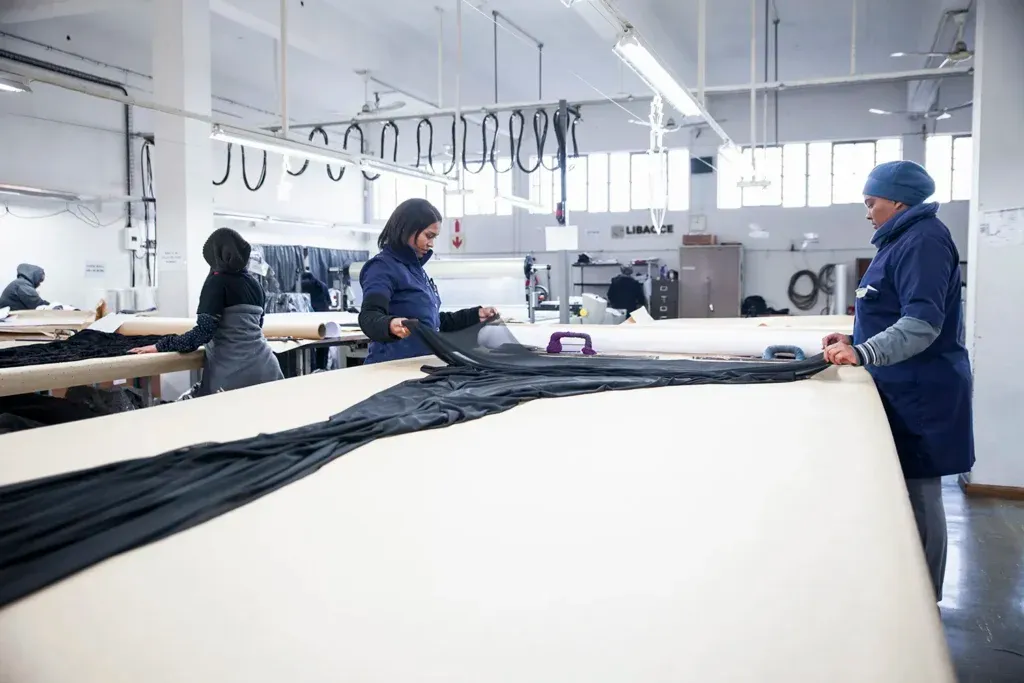
Turkish textile manufacturing also tends to be vertically integrated — coating, cutting and sewing in the same building — which shortens the loop when a specification changes.
Questions worth asking a manufacturer
- Do you coat in-house, or buy coated fabric? It determines how much of the specification they can actually change.
- What happens if the approved sample and the production run differ? The answer tells you how they think about responsibility.
- What is your sampling process, and how many rounds are included?
- Can you produce documentation in my format for my customers?
- What is the minimum volume, and how does the price move with it?
The stages of a programme
- Brief and sample exchange
- Construction proposal, with the trade-offs stated
- Sampling, evaluation and testing
- Sample approval — this becomes the reference
- First production run
- Ongoing supply against call-off
Time spent in stages two and three is what keeps stage six uneventful.
What to keep control of
Your brand, your artwork, your size range and your documentation format. A good OEM partner produces to your specification and leaves the brand relationship entirely yours — the product should arrive with nothing on it that points back to the factory.