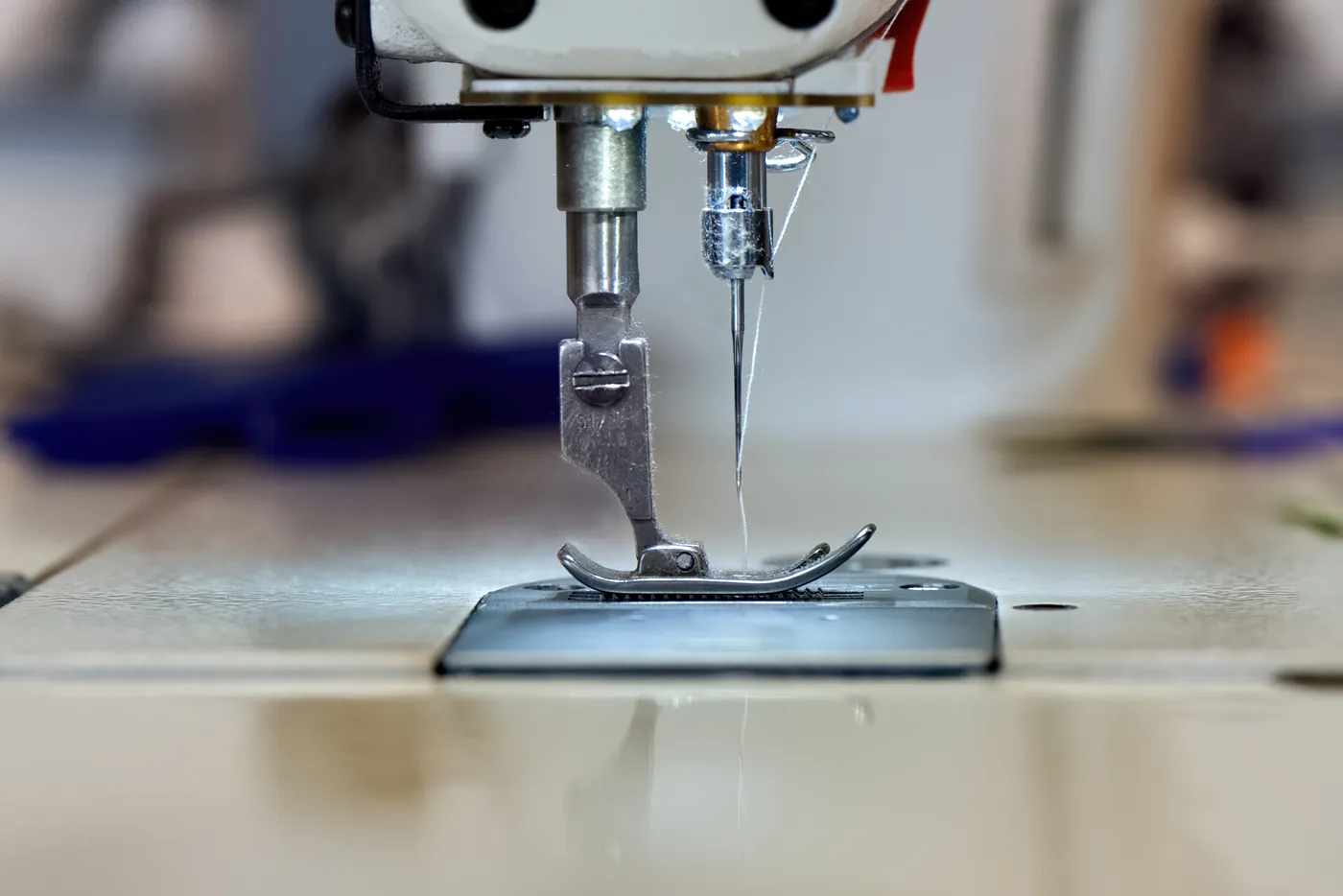
A welded seam is usually the better fluid barrier: the two layers of PU-coated fabric are fused by high-frequency (HF) or ultrasonic welding, so there is no thread and no needle hole for fluid to follow. A stitched seam is joined with thread, and every stitch pierces the coating. Stitched covers can still be the right choice where stretch, softness and cost matter more, but for covers that are disinfected often and must keep fluids out of the core, welding is the stronger construction.
Why do seams matter so much?
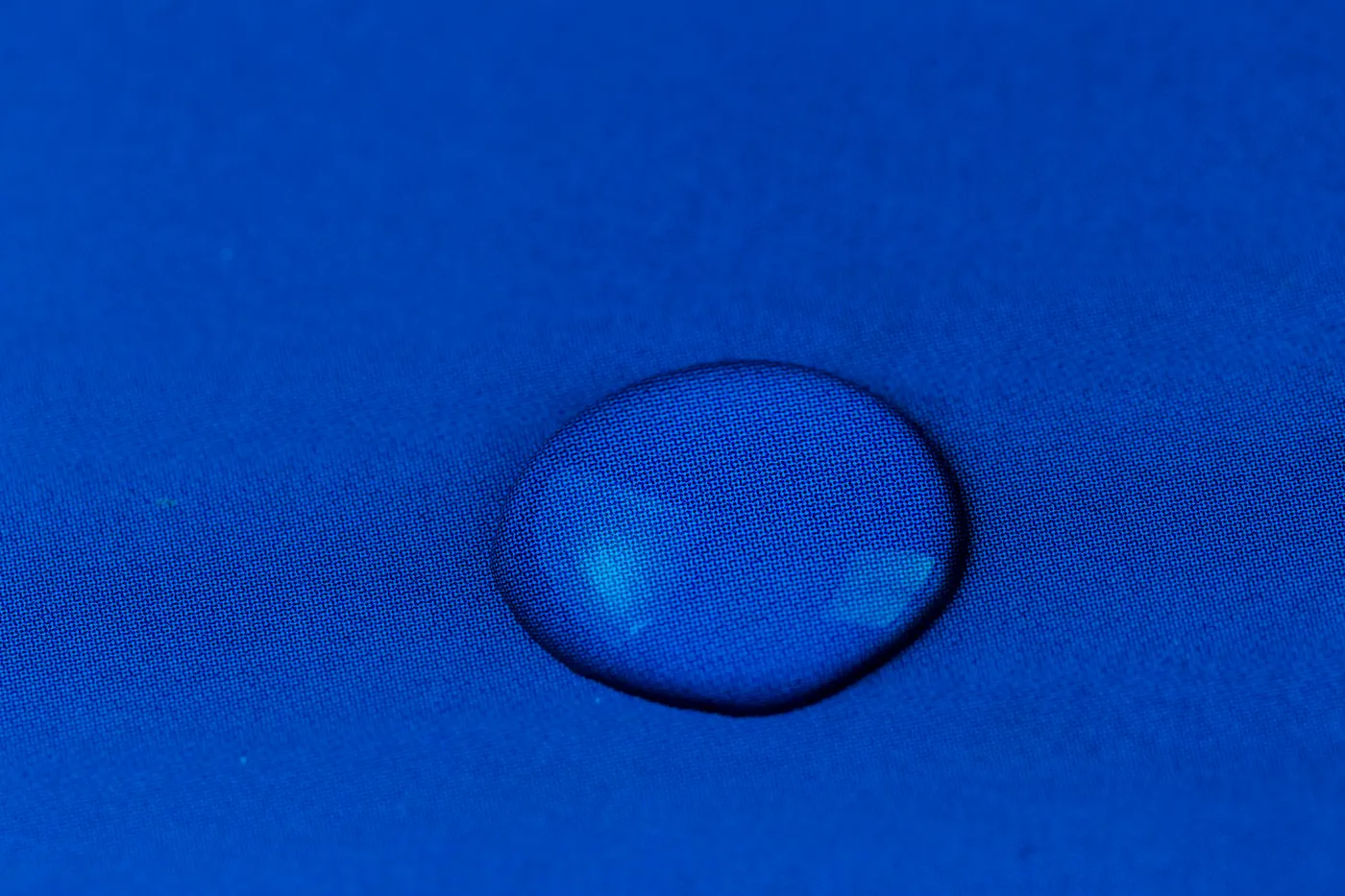
The fabric of a good PU cover is waterproof across its whole surface. The weak points are where the pieces are joined: seams, corners and the zip. A cover rarely fails in the middle of a panel; it fails along a seam. That is why our guide to cleaning a PU mattress cover tells you to check the seams and corners every time the cover is off.
How is a stitched seam made?
The panels are sewn together with thread. Each stitch makes a small hole through the coating, and the thread itself can carry moisture along the seam. Manufacturers reduce this with seam tape or sealing, and a well-made stitched seam can perform well, but the holes are there by design, and tape can lift over time under repeated washing and disinfection.
How is a welded seam made?
- High-frequency (HF) welding: radio-frequency energy heats the coating between two electrodes until the layers melt together under pressure.
- Ultrasonic welding: high-frequency vibration generates the heat at the joint itself.
In both cases the two layers fuse into one, with no thread and no holes. Libacce makes PU covers with both methods and chooses per construction.
Stitched or welded at a glance
- Fluid barrier: welded seams are continuous, with no needle holes; stitched seams have needle holes that must be sealed.
- Cleaning: a welded seam is smooth and easy to wipe; a stitched seam has a thread line where soiling can sit.
- Flexibility: a stitched seam can keep more of the fabric's stretch and softness; a welded seam can be slightly stiffer along the joint.
- Materials: welding needs a coating that welds; stitching works with almost any fabric.
- Cost: depends on the design and the volume. Ask for both options in the same quotation.
Which should you choose?
- Frequent disinfection, high fluid exposure, long service life: welded.
- Comfort first, maximum stretch, hotel or home beds: stitched can be enough.
- Not sure: ask for a sample of each and test them on your own mattress.
Questions to ask a supplier
- Are the seams stitched, taped or welded, and with which method?
- How is the zip area protected from fluid?
- Have the seams been tested after washing and disinfection?
- Can you see a cut cross-section of the seam?
Libacce covers
Our welded seamless PU mattress cover is made with HF or ultrasonic welded seams to your dimensions. Our PU hospital mattress cover is the stitched, two-way-stretch option, washable up to 85 °C. Send your mattress size, quantity and cleaning regime to request a quote for either, or both.